Turn policies, SOPs, and operating documents into governed decisions, structured outputs, and actions
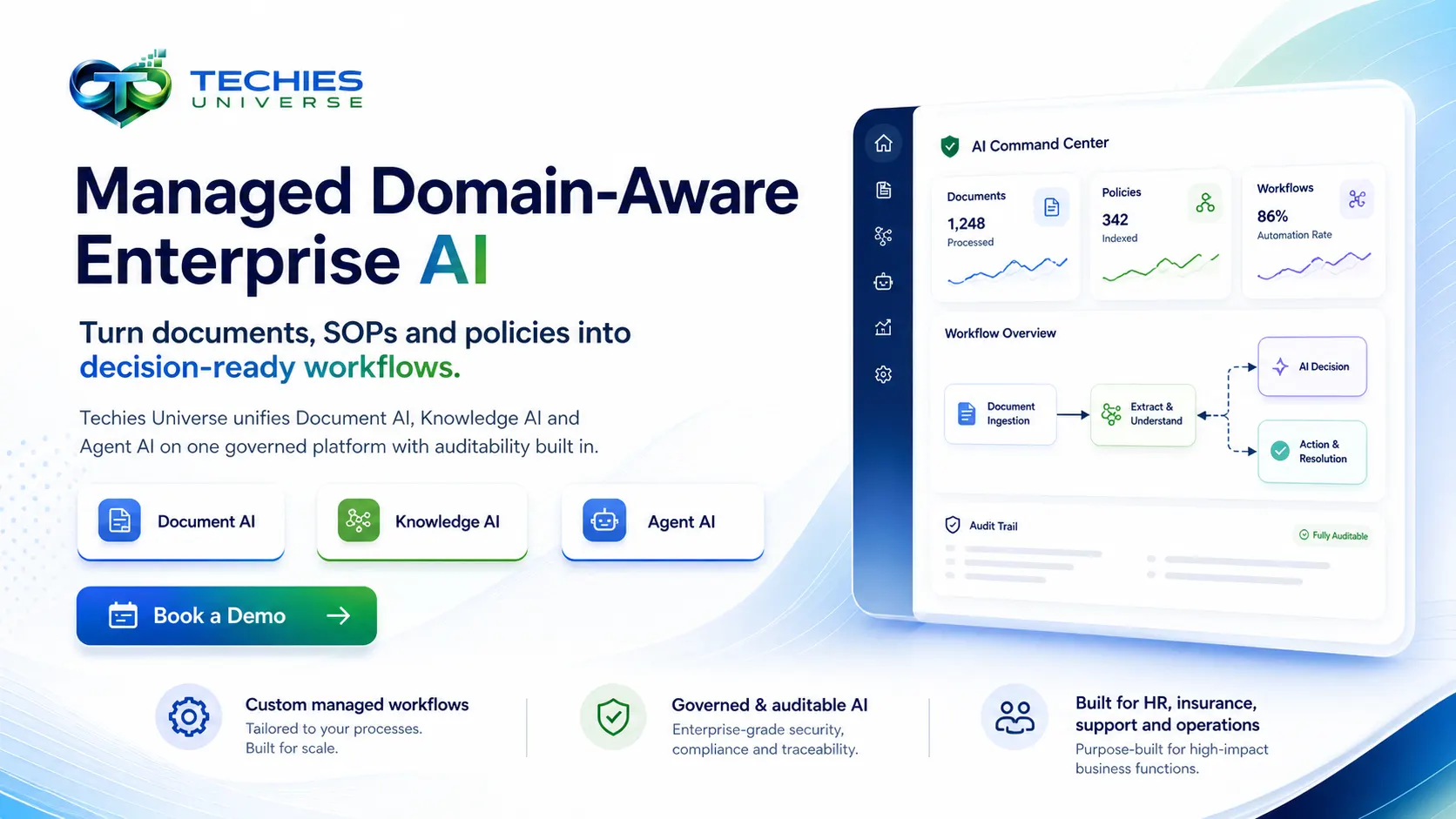
Techies Universe combines document intelligence, governed enterprise RAG, approval copilots, API-first delivery, and internal agent workflows so teams can retrieve the right policy, classify documents, extract structured fields, support decisions with citations, and route work with audit-ready control.
Category fit
This is not just a chatbot. It is a governed decision-support, document intelligence, and workflow layer on top of enterprise documents.
Best-fit buyers
Operations, risk, compliance, claims, grievance, shared services, and internal support teams working against policy-heavy documents.
What the product includes
The platform combines ingestion, retrieval, structured extraction, decisions, workflow support, and operational visibility instead of stopping at document chat.
Document intelligence
Process PDFs, text, markdown, and scanned pages with metadata, chunking, OCR fallback, classification, summaries, and version-aware indexing.
Governed enterprise RAG
Return cited answers from approved document sets with tenant isolation, ACL filters, version controls, and retrieval guardrails.
Approval support
Guide approval and review decisions with constrained options, rationale, citations, and request traceability.
Form fill assistance
Answer policy-driven form questions using source-backed evidence from the active document version.
Internal agent workflows
Create tasks, collect missing inputs, propose action plans, simulate execution, and keep audit events on task state changes.
Usage and evaluation
Track usage, latency, grounding, version adoption, and evaluation results for controlled rollout and review.
What document intelligence actually returns
Buyers should see more than OCR and chunks. The platform can classify operational documents, extract fields, summarize contents, flag exceptions, and return review-ready JSON.
- Document classification: identify PAN, Aadhaar, passport, claim form, bank statement, invoice, or policy schedule classes.
- Structured extraction: return names, IDs, dates, addresses, policy numbers, claim values, and status fields in machine-readable format.
- Reviewer summaries: produce concise operational summaries for onboarding, servicing, claims, and exception queues.
- Exception detection: flag mismatched names, missing pages, expired IDs, unsupported formats, or low-confidence fields.
- Review console inputs: surface confidence, extracted fields, notes, and escalation status for human review.
Structured output can feed review queues, approval logic, downstream apps, or agent tasks instead of stopping at free-form text.
{
"document_type": "aadhaar",
"classification": "kyc_identity",
"summary": "Government-issued identity document for onboarding review.",
"entities": {
"name": "Ravi Kumar",
"aadhaar_last4": "4128",
"dob": "1992-08-14",
"address": "Bengaluru, Karnataka"
},
"exceptions": ["address_mismatch"],
"status": "review_required"
}
Document intelligence as a deployable solution
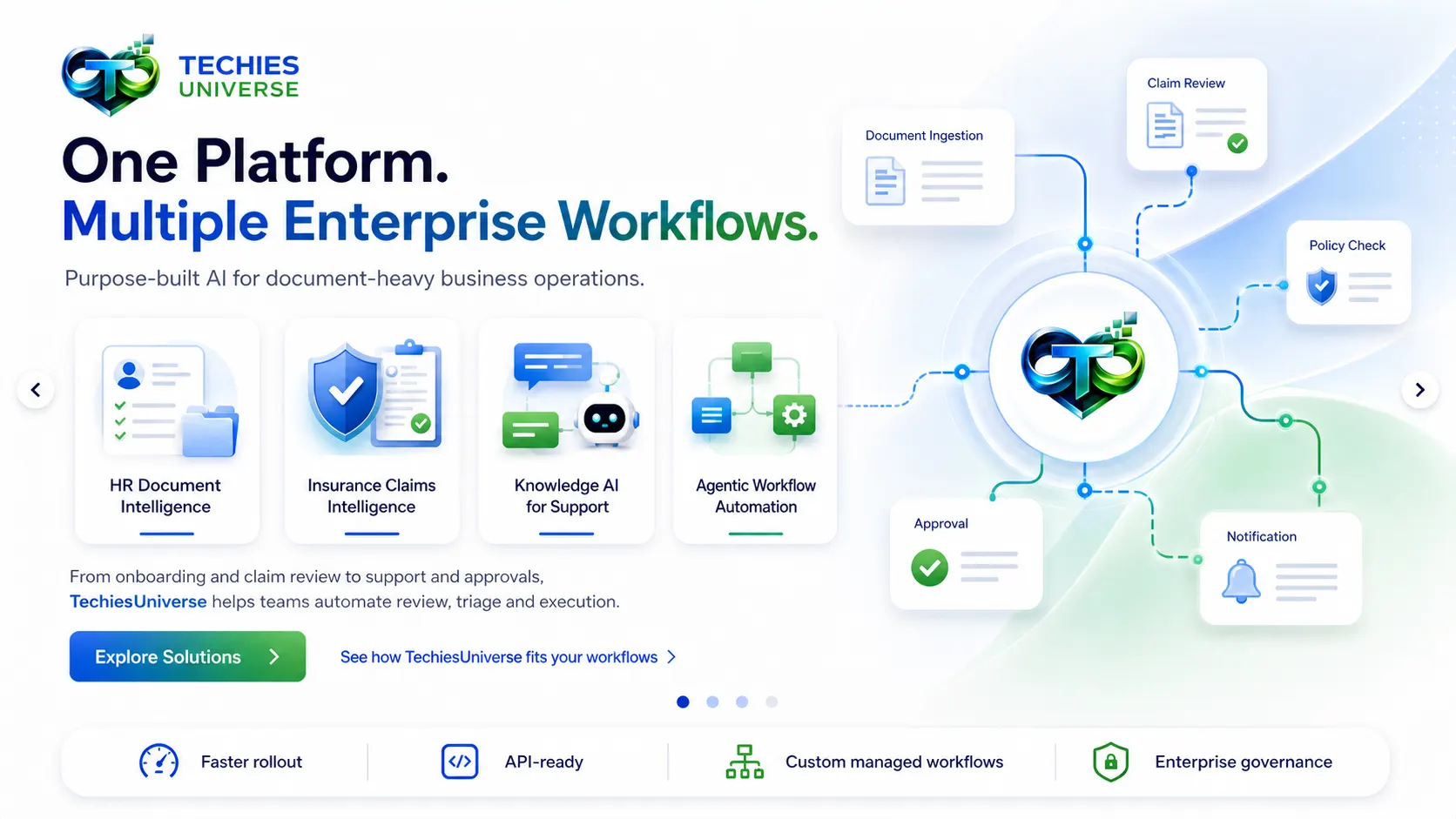
This should read like a product block, not a feature mention. The workflow is clear: classify the document, extract fields, summarize it for reviewers, validate against policy, and send results through API or workflow.
How it works
A simple deployment path matters for enterprise buyers. The platform follows a governed flow from document intake to review and downstream action.
How teams use it
A typical deployment starts with approved enterprise documents and expands into high-value internal workflows.
- Ingest approved documents: upload policy, SOP, guidance, and operational forms with metadata and retention context.
- Retrieve governed evidence: query the right tenant and versioned knowledge with role-aware access controls.
- Support decisions: answer questions, recommend approvals, and fill forms with citations and bounded context.
- Return structured outputs: expose extracted fields, exceptions, and summaries for downstream systems or review queues.
- Track and improve: monitor usage, review quality, and run evaluation sets before wider rollout.
- Claims and grievance triage
- Internal operations knowledge assistance
- Policy and SOP lookup for frontline teams
- Approval queues and exception handling
- Compliance-sensitive form and response support
- Approved documents and version owners
- One or two internal workflows to operationalize first
- Evaluation questions and reviewer inputs
- Defined success metrics for quality, adoption, and turnaround time
- Version-aware retrieval and document lineage
- Department and sensitivity filters
- Request IDs, logs, and audit history
- Managed rollout with evaluation and usage visibility
API-first delivery for product and ops teams
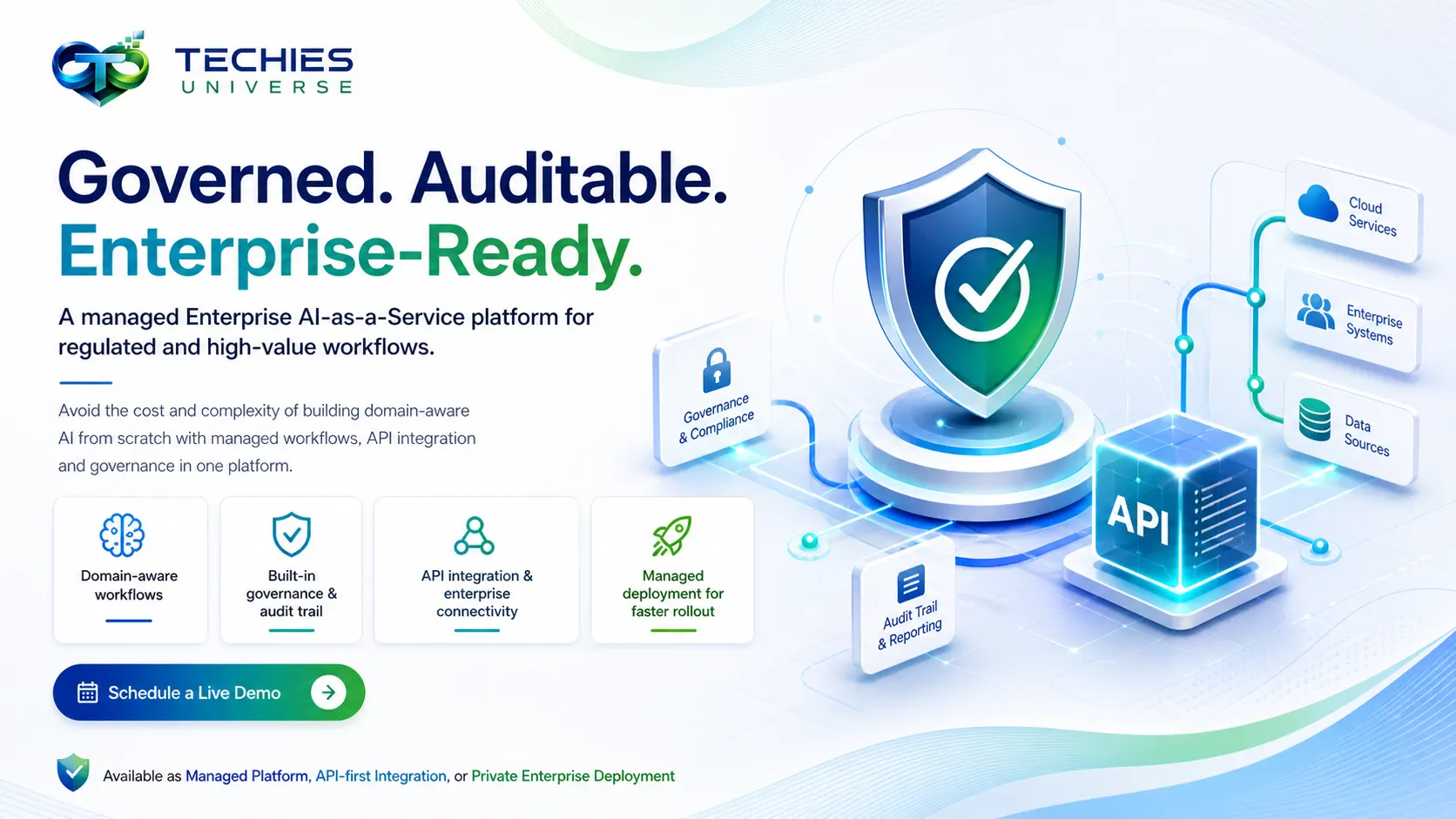
The platform can be sold as operator UI plus APIs, not only as a workflow dashboard. That matters when buyers want to embed outputs into existing systems.
Sandbox and tenant keys
Provision tenant-scoped API keys, isolate test environments, and validate flows before enabling production traffic.
Schema-based responses
Return structured JSON for document classification, extracted entities, summaries, exceptions, and downstream workflow fields.
Sync, async, and webhook flows
Support immediate responses for low-latency tasks, async processing for larger files, and webhook or polling models for completion events.
- API-first document processing and governed retrieval endpoints
- Response schemas for extraction, summary, exception, and review outcomes
- Tenant-scoped keys, request traceability, and controlled rate limits
- Webhook callbacks or status polling for async jobs
- Approval systems and internal review queues
- Claims desks, onboarding systems, and compliance tools
- Internal portals, CRMs, and custom case-management flows
- Agent workflows that need structured fields as inputs
Pilot packages and deployment models
The site already speaks in enterprise pilot language. This section makes the commercial and deployment path easier for buyers to understand.
One workflow, one approved corpus
Best for proving document intelligence and governed decisions in one operational lane.
- Single workflow such as claims, grievances, or approvals
- Approved document set and version owners
- Evaluation set and reviewer checkpoints
- Weekly rollout review and quality tracking
Operator UI plus control layer
Best for teams that want the full product experience with usage, eval, approvals, and workflow support.
- Multi-user operator workflows
- Usage and evaluation visibility
- Approval support and review handling
- Managed rollout across more than one team
Structured outputs into existing systems
Best for platform teams embedding classification, extraction, summary, and validation into their own applications.
- Tenant-scoped keys and sandbox access
- Sync or async processing model
- Webhook or polling integration paths
- Schema-based outputs for downstream systems